
OnlyFans pricing is more volatile than most subscribers assume, and ranking data that looked accurate last week can mislead you today. Reading ranking cards with a critical eye is the only reliable way to avoid paying a price that no longer exists. Prices shift because creators run promotions, test new tiers, and adjust permanently as their audience grows. Understanding these dynamics turns a ranking list from a static menu into a moving picture you can actually use.
The core skill is simple: treat every displayed price as a snapshot with an expiration date. Once you learn where that expiration hides, you can judge whether a number is worth acting on or deserves a quick manual check. This guide walks through the mechanics behind price changes, how ranking sites capture them, and the verification habits that protect your budget. BestOnlyFans refreshes its rankings every month.

Price Volatility Patterns on OnlyFans Pages
Paid subscriptions on OnlyFans must sit between $4.99 and $49.99, so every change happens inside a fairly narrow band. Most creators settle in the $4.99 to $15 range, with averages clustering around $5 to $10. When a page moves within that band, it is usually reacting to audience behavior rather than random experimentation. BestOnlyFans refreshes its rankings every month.
Promotional pricing is the most visible pattern. A creator can offer a first month below the $4.99 base floor, such as a $3 first month, because the minimum applies to the base price rather than introductory offers. These promotions typically run for a defined window, then the page returns to its standard rate. Free pages follow a different logic entirely: the subscription sits at $0 and revenue comes from pay-per-view messages and tips instead.
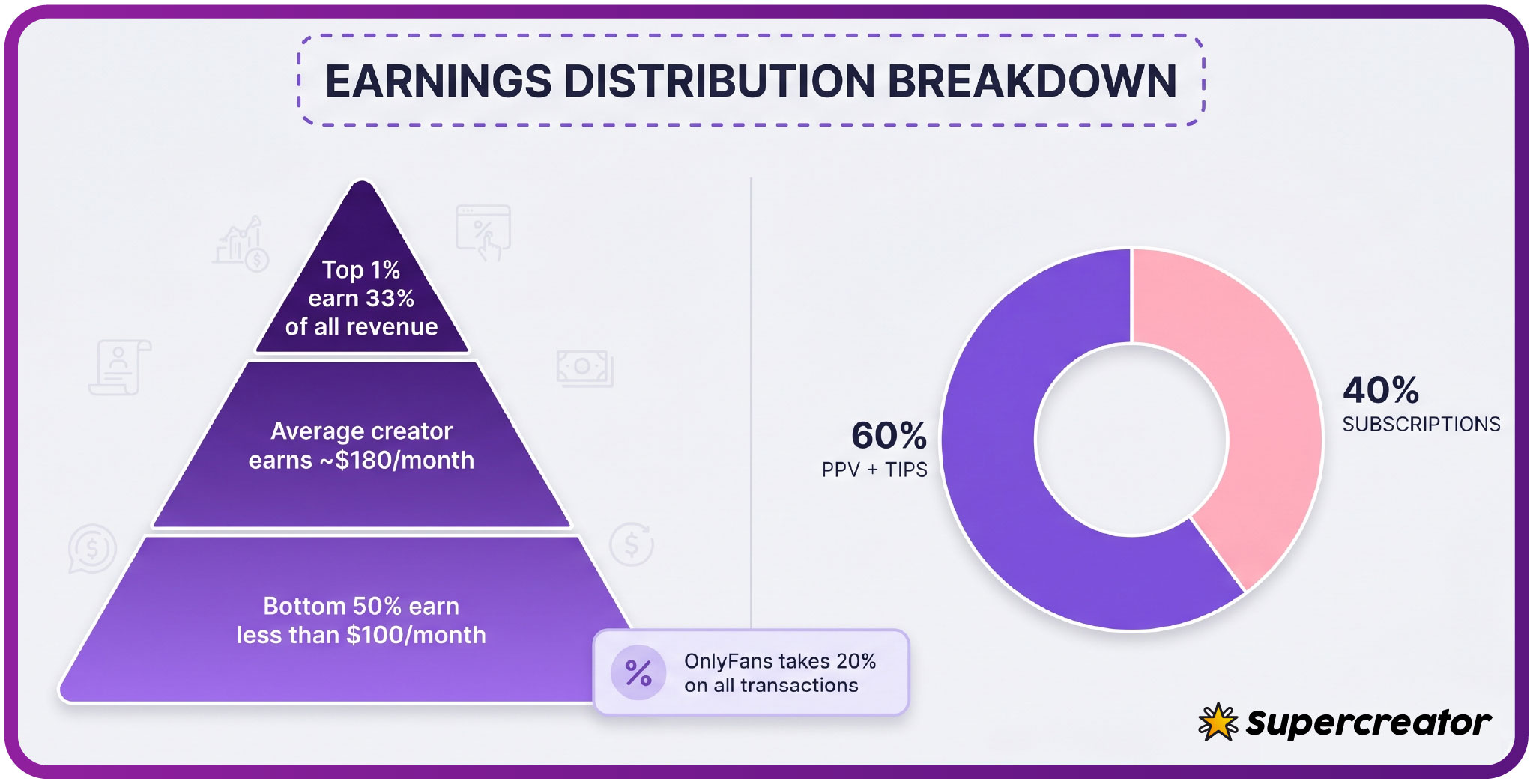
Permanent increases follow a recognizable rhythm too. A creator who crosses a follower milestone, expands into a new content category, or sees seasonal demand climb may raise the base rate and hold it there. Because the platform takes 20% and the creator keeps 80%, even a one-dollar increase changes net earnings meaningfully at scale, which is why raises tend to stick once they happen.
- New follower milestones that justify a higher base rate
- Content type expansion, such as adding longer-form or themed sets
- Seasonal demand shifts around holidays and summer months
- Competitive positioning against similar pages in the same niche
- Responses to platform fee or payout policy adjustments
- Promotional experiment conclusions that showed willingness to pay
For subscribers, the practical takeaway is that a price change is usually deliberate and durable, not a glitch. When you see one in ranking data, assume it reflects a real decision the creator made, and plan around it rather than waiting for it to revert.

How Ranking Sites Capture and Display Price Data
Without a native search layer, aggregators become the practical starting point for finding pages, and their data-handling choices directly affect what you see. A ranking card is not a live feed from the platform; it is a record assembled from periodic checks and then displayed in a standardized layout.
That distinction matters because each data element on a card refreshes on its own schedule. Base price, promotional price, and historical lows may not update at the same moment, which is how a card can show a valid promotion next to an outdated base rate.
| Data Element | Update Frequency | Subscriber Action Required |
|---|---|---|
| Base subscription price | Refreshed on periodic re-checks, often weekly | Confirm on the creator page if the timestamp is more than a few days old |
| Promotional first-month price | Updated when a promotion is detected, not on a fixed cycle | Check for an active countdown timer before assuming it applies |
| Historical low price | Revised only when a new low is recorded | Treat as context, not as a currently available offer |
| Last-updated timestamp | Set each time the card is regenerated | Use it as your primary freshness signal before acting |
Even when a site re-checks a page, the refreshed value has to pass through the display pipeline before it appears on the card you load. In practice, this means a card can lag the live page by hours or days, and the lag grows for low-traffic creators who get re-checked less often.
Tip: before trusting any ranking card, scroll to its timestamp first. If the last update predates the promotion you are hoping to catch, verify directly on the creator page rather than subscribing from the card.
Timestamp Decoding and Data Freshness Signals
Timestamps are usually small, placed near the price or at the bottom of the entry, and easy to skip when you are scanning quickly.
A timestamp tells you when the card was generated, not when the price last changed. Those are different facts. A card updated yesterday might reflect a price set three months ago, or it might reflect a promotion that ended this morning.
- Locate the last-updated timestamp on the ranking card or profile entry.
- Calculate the elapsed time between that date and today.
- Check the page description for edit indicators or recently added promotional language.
- Compare the displayed price against any promotional end date listed on the card.
When it stretches beyond a week, treat the number as a hypothesis and confirm it before entering payment details.

Price History Reconstruction Techniques
Even without a formal price history feature, you can reconstruct recent changes from indirect signals scattered across the web. The goal is not perfect accuracy but a reasonable estimate of whether the current price is stable, rising, or promotional.
A review written in March that mentions a $7 subscription and another from June mentioning $9 tells you the creator raised the rate at some point in between. Community discussions and archived screenshots serve the same function, though they demand more caution because anyone can post an edited image.
| Signal Type | Reliability Level | Verification Method |
|---|---|---|
| Dated reviews mentioning a price | Moderate to high | Cross-check multiple reviews from the same period |
| Community screenshot archives | Low to moderate | Look for unedited captures with visible timestamps |
| Creator announcement post timing | High when dated | Confirm the announcement matches the current card price |
| Sudden ranking position shifts | Low | Rule out content volume changes before assuming a price cause |
| Cross-site price comparison | Moderate | Compare two independent ranking sources for agreement |
- Review dates that reference different subscription prices over time
- Screenshot archives preserved in community discussion threads
- Creator announcement posts with visible publication dates
- Sudden ranking position changes without a matching content volume shift
- Price comparisons across two or more independent ranking sites
If a dated review, a cross-site comparison, and a ranking shift all point the same direction, you have a defensible estimate of where the price has been and where it is heading.
For subscribers who follow creators across multiple regions, directories that organize pages geographically add another comparison layer. Browsing best onlyfans by country lets you see how similar pages get priced in different markets.

Auto-Renewal Implications of Observed Price Changes
When a creator raises their price, auto-renew stops for existing subscribers at the old rate. Your access continues until the paid period you already purchased runs out, and then it ends unless you resubscribe at the current price.
Someone who subscribed before a raise keeps their old rate until the period expires. A subscriber who catches a promotional window pays the discounted first month and then faces the standard rate at renewal.
- Existing subscriber at the old price, auto-renew stopped, access until period end
- New subscriber arriving after the increase, paying the full new rate
- Promotional capture before the increase, paying the discounted first month
- Missed window after the increase, facing the higher base with no discount
The confirmation dialog that appears when you cancel lists standard reasons and makes the renewal state explicit, so check it if you are unsure where you stand.

Verification Steps Before Subscribing
The final step before entering payment details is confirming that the price you saw in ranking data matches what the platform will actually charge.
- Visit the creator page directly without referral parameters in the URL.
- Confirm the displayed price in your local currency, including any conversion differences.
- Check whether a promotional countdown timer is present and how much time remains.
- Review the terms link for first-month pricing language and renewal conditions.
Currency display deserves extra attention. A card may list a dollar figure while your account settles in another currency, and the converted amount can look different enough to matter.
Warning: a $0.10 verification hold may appear on your card statement after adding a payment method. It is refunded within days and is not a subscription charge.
Longitudinal Tracking for Price-Sensitive Subscribers
If you follow several creators and want to avoid overpaying, a simple personal tracking habit pays off. Record the price, the date you observed it, and the source on a spreadsheet or note. Over a few months, you build a private price history that no public ranking site provides.
Track pay-per-view behavior alongside subscription costs. PPV messages unlock up to $50, paid chat commonly runs $3 to $5 per message, and tips can reach $100. A page with a low subscription price can still be expensive overall if messaging unlocks dominate your spending.
Review your notes before each renewal decision. If a creator tends to raise prices after follower milestones, you can time a subscription to lock in the current rate.
Limitations of External Price Monitoring
Ranking sites cannot observe checkout screens, regional pricing differences, or promotions that exist only for specific visitor segments.
Any aggregator works from periodic checks, which means there is always a window where the live page and the card disagree. Community screenshots can be edited, reviews can be outdated, and cross-site comparisons can simply repeat the same stale source.
Use ranking data to narrow your options, then verify on the platform before committing money.

FAQ
How often does BestOnlyFans refresh price data for active creators?
Refresh intervals vary by creator traffic and site resources, with many cards re-checked on a weekly rhythm.
What should I do if the ranking price differs from what I see on OnlyFans?
Trust the platform page. The checkout screen shows the authoritative price, including currency conversion and any active promotion.
Can I trust promotional prices shown on ranking cards if the timestamp is several days old?
Treat them as unconfirmed. Promotions often run for short windows, so a card that is several days old may reference an offer that already expired.
Why did my subscription auto-renew cancel when I didn’t request it?
When the base price rises, auto-renew stops and your existing access continues until the paid period ends.